
- Built for South Texas storms, Hill Country runoff, and everyday curb appeal
- Why seamless gutters are the go-to choice in San Antonio
- Quick “Did you know?” facts (San Antonio & Hill Country context)
- A step-by-step seamless gutter installation checklist (what quality looks like)
- A quick comparison table
- Local angle
- When it’s time to call a pro (and what to ask)
- FAQ
- Glossary (helpful terms to know)
Built for South Texas storms, Hill Country runoff, and everyday curb appeal
A seamless gutter system is one of the simplest upgrades that helps protect a home or commercial property from water damage—yet the details matter. In the San Antonio area, rainfall can arrive in short, intense bursts, and Hill Country terrain can push runoff fast toward foundations. Add clay-heavy soils in many neighborhoods, and you’ve got a recipe for erosion, staining, and settling when roof water isn’t carried away correctly. This guide explains what “good” gutter installation looks like, what to ask for, and how to keep your system performing year after year—especially around La Vernia, San Antonio, and surrounding communities.
Why seamless gutters are the go-to choice in San Antonio
“Seamless” means each gutter run is formed to length on-site, reducing the number of joints where leaks typically start. Fewer seams also gives a cleaner look and helps the gutter stay aligned during seasonal expansion/contraction. In South Texas, that reliability is important because water management isn’t only about preventing drips—it’s about moving a high volume of roof runoff away from your foundation and exterior walls.
What gutters protect (when installed correctly)
San Antonio’s climate also swings between drought and heavy rain events. Even in drier stretches, when the rain does come, you want a system that handles flow without overflowing at corners, valleys, or the “dead zones” where roof sections dump water rapidly.
Quick “Did you know?” facts (San Antonio & Hill Country context)
A step-by-step seamless gutter installation checklist (what quality looks like)
1) Measure roof planes and “high-flow” zones
A real install plan starts with water flow, not just linear feet. Roof valleys, steep pitches, long runs, and areas where two roof sections meet can dump water quickly into one gutter spot. These zones often need extra downspout capacity or different placement to prevent overflow and erosion.
2) Choose the right gutter size and downspout plan
Bigger isn’t always necessary, but undersizing is a common reason gutters “fail” during storms. A quality installer matches the gutter profile and downspout count to your roof area and flow points, then confirms that downspouts discharge where water can safely move away.
3) Set slope correctly (quiet flow, no standing water)
Gutters must be pitched enough to drain toward outlets, but not so steep that they look crooked. Proper pitch reduces standing water, helps prevent mosquito breeding in trapped puddles, and lowers the chance of corrosion or sludge buildup.
4) Use secure hangers and protect fascia
In windy fronts and heavy downpours, gutters can carry a surprising load. Correct hanger spacing and solid fastening reduce sagging and keep water lines stable at corners and long runs. If the fascia is soft or compromised, it should be addressed so fasteners don’t pull out later.
5) Seal and finish with longevity in mind
End caps, miters, and outlets are common leak points if sealed poorly. A professional finish means clean joints, correct sealant application, and a final water test—especially near entryways, patios, and high-visibility elevations where staining is noticeable.
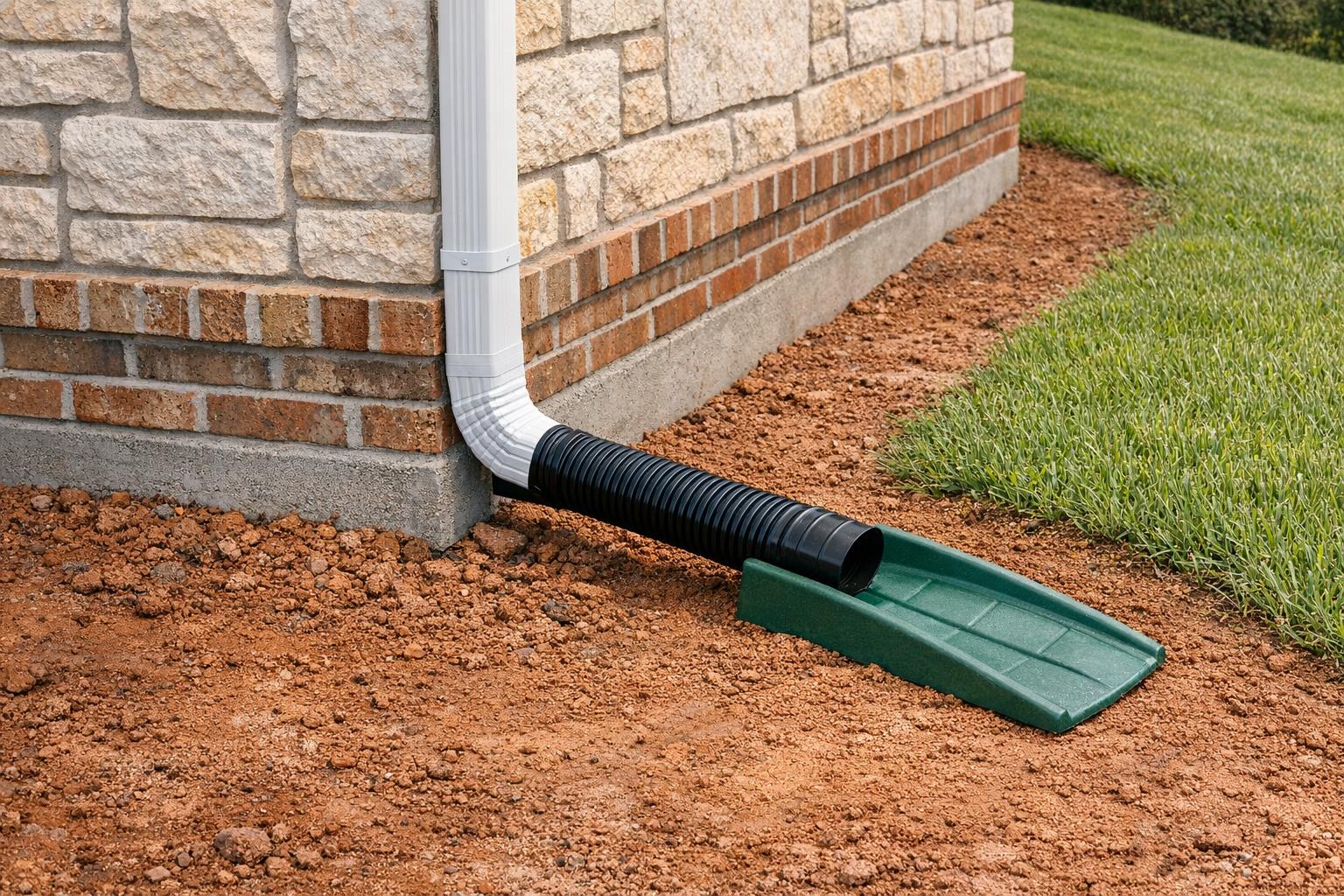
6) Discharge water away from the foundation (this is non-negotiable)
Even perfect gutters can cause problems if the downspouts dump water at the base of the wall. Building-science guidance commonly recommends routing discharge to a sloped final grade at least 5 feet from the foundation (or using a longer, controlled solution such as piping to a catchment area). If your property has tight side yards, flat grades, or erosion issues, a pro can recommend extensions, pop-up emitters, or other drainage strategies that keep water moving where it belongs.
A quick comparison table: what impacts performance the most
| Install Detail | If Done Right | If Done Wrong | What You’ll Notice |
|---|---|---|---|
| Sizing & downspout placement | Handles heavy bursts without overflowing | Water spills at corners/valleys | Erosion lines, stained siding, wet walkways |
| Pitch/slope | Consistent drainage to outlets | Standing water or “backflow” spots | Mosquitoes, sludge, drip lines, and premature wear |
| Hangers & fastening | Stays straight, resists wind load | Sagging, pulling away from fascia | Visible dips, overflow, water behind the gutter |
| Downspout discharge | Water carried away from foundation | Water dumps at wall base | Soil washout, pooling, musty crawlspace/edge |
Local angle: what San Antonio + La Vernia homeowners should prioritize
If you live in San Antonio, La Vernia, New Braunfels, Boerne, Fair Oaks Ranch, or nearby Hill Country communities, you’ve likely seen both sides of the weather: long dry periods and sudden heavy rains. Hill Country geology and elevation changes can accelerate runoff, which is why drainage planning matters as much as the gutter itself.
Practical recommendations for the area
When it’s time to call a pro (and what to ask)
If you’re seeing overflow, water staining, drips at corners, pooling near the foundation, or gutters pulling away, it’s worth getting an inspection. A good contractor will talk about roof flow points, downspout discharge, and maintenance—not just “how many feet of gutter.”
Good questions to ask
If you need help locally
S & H Seamless Gutters is locally owned in La Vernia and serves San Antonio and surrounding Hill Country communities with installation, repair, cleaning, replacement, leaf guard options, and ongoing maintenance.
FAQ: Seamless gutter installation in San Antonio
How do I know if my gutters are undersized?
The most common sign is overflow during moderate-to-heavy rain, especially at corners and near roof valleys. You might also see washout lines in mulch/soil directly below one area of the roof.
Do seamless gutters eliminate leaks completely?
They reduce the number of joints dramatically, which lowers leak risk. You can still develop leaks at end caps, corners (miters), and outlets over time if sealant fails or if the gutter is pulled out of alignment—so inspection and maintenance still matter.
How far should downspouts discharge from the house?
A common best practice is to route roof runoff to a sloped final grade at least 5 feet away from the foundation, or to a controlled system that carries water farther away (for example, to a catchment area that isn’t tied into the foundation drainage).
Are leaf guards worth it in the San Antonio area?
If your roof collects oak leaves, needles, or seed pods, leaf guards can reduce clogs and the frequency of cleanings. They aren’t “set it and forget it,” but they often help prevent the kind of blockage that causes overflow and fascia rot.
What maintenance should I plan for after installation?
Plan on periodic checks for debris buildup, downspout clogs, hanger looseness, and sealant wear at corners/outlets. If you have overhanging trees, schedule cleanings more often—especially after windy fronts and heavy storms.