
A practical material guide for homeowners and property managers who want fewer clogs, fewer leaks, and better protection from sudden downpours
If you’re comparing aluminum vs copper vs steel gutters, you’re already thinking like a long-term property owner: material choice affects how your gutters handle heavy rain, how often you’ll need maintenance, and how well they’ll resist corrosion over time. In the San Antonio area—where long dry stretches can be interrupted by short, intense storms—your gutters need to move water fast without pulling away from the fascia, overflowing, or rusting out.
Below is a clear, experience-based comparison tailored to San Antonio, La Vernia, and surrounding Hill Country communities, plus what to consider before you invest in a new system.
Why gutter material matters more in the San Antonio region
South Texas weather and terrain can be hard on drainage systems. Fast runoff, wind-driven rain, and storm bursts can overwhelm undersized or poorly installed gutters. When a system can’t keep up, overflow often shows up as stained siding, washed-out landscaping, fascia rot, and—worst case—foundation movement or erosion near the slab.
That’s why choosing the right gutter material is about more than looks. It’s about balancing: corrosion resistance, strength, weight, maintenance needs, and compatibility with other metals on your roofline.
Quick “Did you know?” facts (useful before you request quotes)
Material-by-material breakdown
Aluminum gutters (most common for residential)
Aluminum is popular across San Antonio because it’s lightweight, rust-resistant, and cost-effective. It’s also a strong match for seamless fabrication, which helps minimize joint leaks. For many homes and small commercial buildings, aluminum hits the best balance of performance and value.
Watch-outs: Can dent from ladders/impacts; may corrode faster if exposed to copper runoff or incompatible fasteners.
Copper gutters (premium look + long service life)
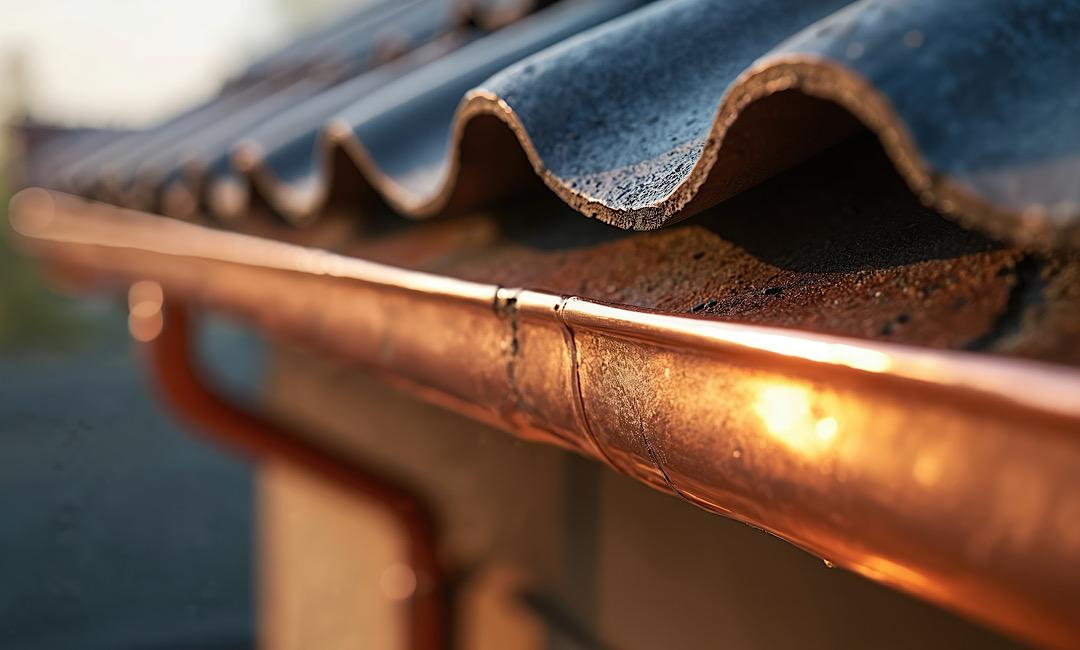
Copper is chosen for its appearance and longevity. Over time, it develops a patina that many owners consider a design feature, especially on higher-end homes or historic-style properties. Copper is also robust in harsh conditions—but it’s an investment, and it must be installed correctly to avoid galvanic corrosion where dissimilar metals touch.
Watch-outs: Higher material/labor cost; must plan metal compatibility (drip edge, flashing, hangers, fasteners, and nearby metals).
Steel gutters (strength first; corrosion management is key)
Steel—often galvanized steel—is valued for rigidity and impact resistance. That can matter on properties where ladders, equipment, or high-traffic maintenance areas are common. The tradeoff is that steel can be more vulnerable to corrosion if its protective coating wears down, especially at seams, scratches, or areas that stay wet due to clogs.
Watch-outs: Rust risk if coating is compromised; heavier material can require robust mounting; avoid copper contact/runoff issues.
Quick comparison table: aluminum vs copper vs steel
| Material | Strength/dent resistance | Corrosion behavior | Maintenance expectations | Best fit around San Antonio |
|---|---|---|---|---|
| Aluminum | Good (can dent) | Won’t rust; can corrode with dissimilar metals | Low-to-moderate; keep clear of clogs | Most homes; best value + performance |
| Copper | Very good | Excellent, but copper runoff can corrode other metals | Moderate; still needs cleaning/inspection | Premium upgrades; long-term ownership |
| Steel (galvanized) | High | Can rust if the coating is compromised | Moderate; monitor seams/scratches | Select use-cases; strength-focused installs |
Tip: When comparing bids, ask what gauge/thickness is being used, how hangers are spaced, and how downspout placement is designed for heavy rain—not just “standard install.”
Local angle: La Vernia, San Antonio, and Hill Country maintenance realities
In the San Antonio metro and nearby communities like La Vernia, Boerne, Fair Oaks Ranch, and New Braunfels, a “good” gutter system is one that stays functional between cleanings and doesn’t get overwhelmed when storms hit hard. That usually means focusing on:
If you’re not sure what you have now, a simple inspection can identify whether you’re dealing with undersized runs, poor pitch, hidden seam leaks, or damage from clogs and overflow.
Choosing the “best” gutter material: a fast decision guide
Choose aluminum if you want a strong, all-around solution with great value and broad design flexibility for most San Antonio-area homes.
Choose copper if you’re investing in a long-term exterior upgrade and want a premium look—just make sure the full roof edge system is designed for metal compatibility.
Choose steel if rigidity and impact resistance are top priorities, and you’re comfortable with periodic checks for coating wear and early rust spots.
If you’d like, S & H Seamless Gutters can evaluate your roofline, drainage paths, and existing metal components (drip edge/flashing) to recommend the most durable option for your property and budget.
Request a quote or inspection (fast, mobile-friendly)
If you’re in San Antonio or nearby areas like La Vernia, Boerne, Fair Oaks Ranch, or New Braunfels, S & H Seamless Gutters can help you compare materials, confirm drainage capacity, and recommend a system that fits your roofline and maintenance preferences.
Prefer maintenance planning? Explore gutter maintenance & inspections to help prevent surprise leaks during storm season.
FAQ: aluminum vs copper vs steel gutters
Are aluminum gutters “good enough” for San Antonio storms?
Yes for most homes—especially when they’re sized correctly and installed with proper pitch and downspout placement. Overflow is more often a sizing, slope, or clog issue than a material issue.
Do copper gutters eliminate the need for cleaning?
No. Copper can last a long time, but leaves, seed pods, and roof grit can still clog any gutter. Material doesn’t prevent buildup—maintenance planning does.
When does steel make more sense than aluminum?
Steel can be a smart pick when your priority is rigidity and impact resistance (certain commercial settings, frequent ladder access, or tougher site conditions). Just plan for coating protection and periodic inspections.
What should I ask a contractor when comparing quotes?
Ask what size and thickness are being installed, how hanger spacing is handled, where downspouts will discharge, and whether any dissimilar-metal contact (like copper-to-aluminum) needs isolation or special fasteners.
Should I add leaf guards in La Vernia or the Hill Country?
Leaf guards can be a strong upgrade on rooflines that concentrate debris (valleys, long runs, trees near the roof). The “best” guard depends on roof type, debris type, and drainage needs—an on-site recommendation is usually worth it.
Glossary (quick definitions)
Seamless gutters: Gutters formed in a continuous run (often on-site) to reduce joints and potential leak points.
Pitch (slope): The slight angle that helps water flow toward downspouts instead of pooling.
Downspout: The vertical pipe that carries water from the gutter to the ground (or to a drainage solution).
Galvanic corrosion: Accelerated corrosion that can occur when dissimilar metals (like copper and aluminum) are connected with moisture acting as an electrolyte.
Fascia: The board along the roof edge where gutters are commonly mounted.
Looking for service in your area? Visit gutter installation in San Antonio, TX or learn more about S & H Seamless Gutters.